



The Power of Predictive Analytics: How AI Can Revolutionize Forecasting
In today's data-driven world, organizations across various industries are constantly seeking ways to gain a competitive edge. One of the most promising avenues for achieving this edge is predictive analytics, powered by artificial intelligence (AI). Predictive analytics involves the use of historical data and advanced algorithms to make informed predictions about future events, trends, and outcomes. In this blog, we will explore the transformative potential of AI-driven predictive analytics and how it can revolutionize forecasting for businesses and industries.

The Foundation of Predictive Analytics
Predictive analytics relies on a robust foundation of historical data. By analyzing past data points and trends, AI algorithms can identify patterns and correlations that are often impossible for humans to discern. These patterns become the basis for making predictions about future events. Here's how AI leverages historical data for forecasting.

Data Collection
The first step in predictive analytics is the collection of relevant data. This data can come from various sources, including customer interactions, sales transactions, website activity, and more.

Data Preprocessing
Raw data often requires cleaning and preprocessing to remove inconsistencies and errors. AI models are highly effective at automating this process, ensuring that the data is suitable for analysis.

Feature Selection
AI algorithms identify the most important features or variables within the data that are likely to impact the outcome being predicted. This step is crucial for creating accurate models.

Model Building
AI models, such as machine learning algorithms, are then used to build predictive models. These models learn from historical data to make predictions about future events.

Model Building
Evaluation and Refinement
Predictive models are continuously evaluated and refined to improve their accuracy. AI can adapt to changing data patterns, making it a dynamic forecasting tool.

The Impact on Business Forecasting
AI-driven predictive analytics can have a profound impact on business forecasting across various sectors. Let's explore some key areas where AI is making a difference.
Sales Forecasting
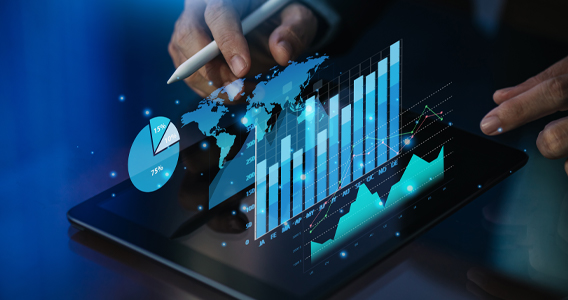
Retailers and manufacturers can use AI to predict product demand, optimize inventory levels, and plan for promotions more effectively. This reduces excess inventory and stockouts, leading to cost savings and increased revenue.

Financial Forecasting
In the financial industry, AI-powered models can predict market trends, assess risk, and optimize investment portfolios. These insights help investors make more informed decisions and reduce financial risks.
Customer Behavior
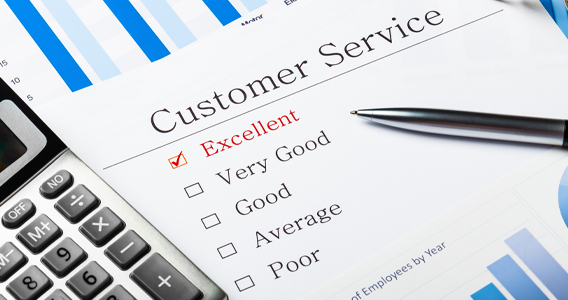
AI can analyze customer data to forecast behavior, enabling businesses to personalize marketing strategies and improve customer retention. Understanding customer preferences and needs is key to staying competitive.

Supply Chain Optimization
Predictive analytics can optimize supply chain operations by forecasting delivery times, identifying potential disruptions, and minimizing transportation costs. This ensures a smoother and more cost-effective supply chain.

Healthcare Predictions
In healthcare, AI can assist in patient prognosis, disease outbreak prediction, and resource allocation. Hospitals and healthcare providers can improve patient care and operational efficiency.

Challenges and Ethical Considerations
While AI-driven predictive analytics offers tremendous benefits, it also presents challenges and ethical considerations. Some challenges include data privacy concerns, algorithm bias, and the need for skilled data scientists and analysts to develop and maintain these systems. Additionally, transparency and fairness in AI decision-making are critical to prevent discriminatory outcomes.
Conclusion
The power of predictive analytics powered by AI is reshaping the way organizations approach forecasting. By harnessing historical data and advanced algorithms, businesses can make more accurate predictions, optimize operations, and gain a competitive advantage. However, it's essential to navigate the challenges and ethical considerations associated with AI-driven forecasting to ensure that these technologies are used responsibly and to their full potential. As AI continues to evolve, its impact on forecasting will only become more pronounced, making it a crucial tool for businesses looking to thrive in the data-driven era.
Predictive analytics involves using historical data and AI algorithms to make predictions about future events, while traditional forecasting methods often rely on historical trends and manual analysis. Predictive analytics leverages advanced technology to provide more accurate and dynamic forecasts.
Effective data collection involves gathering relevant data from various sources, including customer interactions, sales transactions, and more. Data preprocessing is crucial to clean and format the data for analysis. AI can automate many of these tasks, ensuring data suitability.
AI-driven predictive analytics has various applications, such as sales forecasting, financial forecasting, customer behavior analysis, supply chain optimization, and healthcare predictions. These applications help businesses make informed decisions, reduce costs, and improve efficiency.
Ethical considerations include data privacy, algorithm bias, and transparency. To address these concerns, organizations should prioritize data privacy, implement fairness checks in algorithms, and ensure transparency in AI decision-making processes. Ethical guidelines and regulations may also apply.
To get started, businesses should identify their specific forecasting needs and goals. They can then invest in the right data infrastructure, hire skilled data scientists and analysts, and select appropriate AI tools and technologies. Pilot projects and continuous evaluation are essential steps in the implementation process.